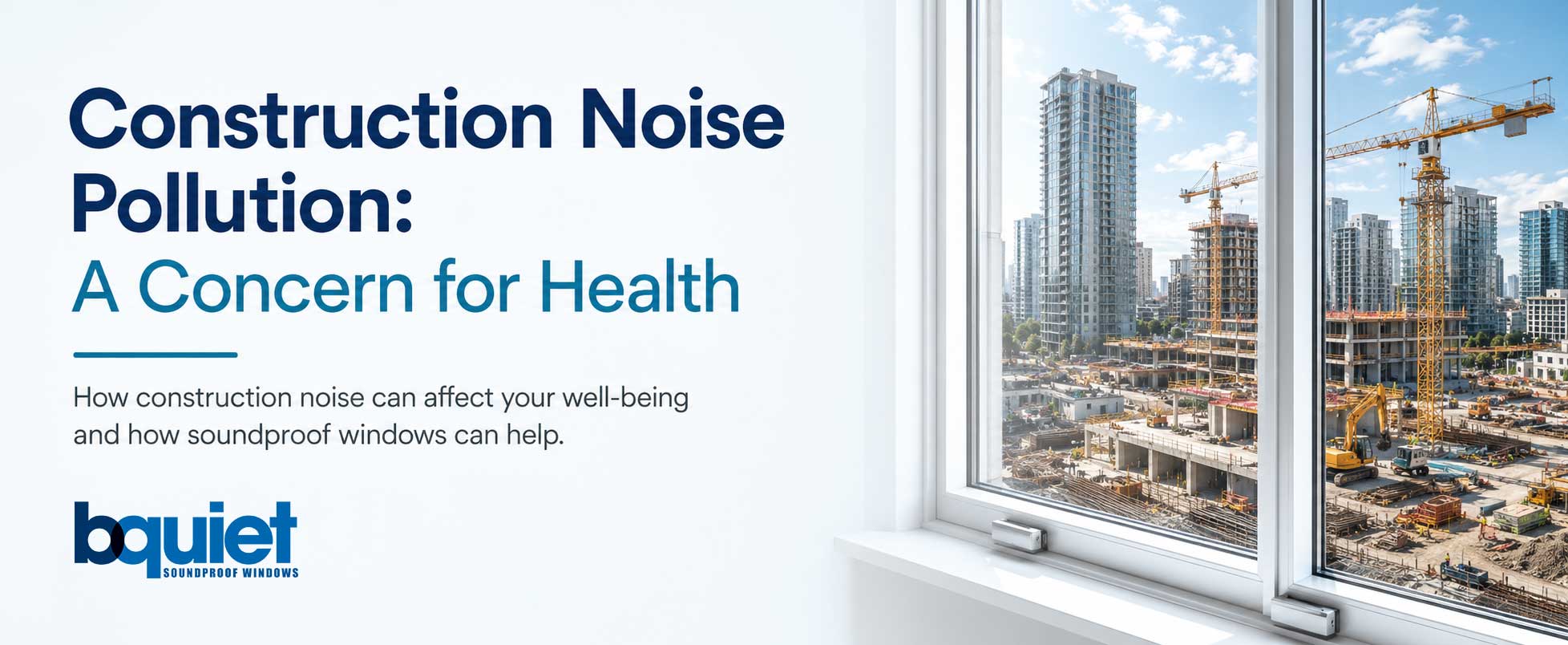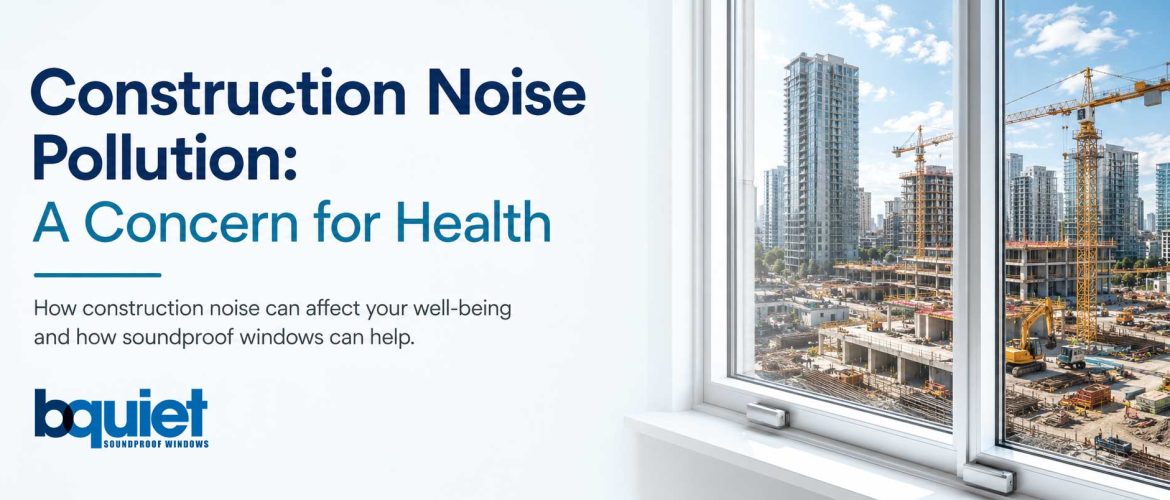
Toronto and the Greater Toronto Area are constantly growing. New condominiums, road repairs, transit expansions and major infrastructure projects are essential to the region—but for homeowners and condo residents living near construction sites, progress can come with a serious downside: relentless noise.
Jackhammers, drilling, heavy machinery, trucks and backup alarms can begin early in the morning and continue throughout the day. In some locations, construction may also continue overnight.
When that noise enters your bedroom, home office or living space every day, it is no longer just an inconvenience. Construction noise pollution can interfere with sleep, concentration, comfort and overall well-being.
Fortunately, homeowners do not have to wait years for a nearby construction project to end. With professionally installed bquiet Soundproof Windows, it is possible to significantly reduce construction noise and create a quieter home in Toronto and the GTA.
What Is Construction Noise Pollution?
Noise pollution refers to unwanted or excessive sound that interferes with normal daily activities.
In an urban environment, common sources include:
- Road traffic
- Airplanes and trains
- Commercial activity
- Emergency vehicles
- Outdoor events
- Construction and roadwork
Construction noise can be particularly disruptive because it is often irregular and unpredictable. A steady background sound may eventually become easier to ignore, but sudden drilling, hammering, machinery and warning alarms repeatedly attract the brain’s attention.
The City of Toronto generally restricts clearly audible construction noise during evenings, overnight hours, Sundays and statutory holidays. However, certain projects may receive noise exemptions or special permissions to operate outside the usual hours.
For example, some work associated with the Gardiner Expressway rehabilitation has been permitted for up to 24 hours a day, seven days a week. The City states that noise levels will be monitored and that efforts will be made to reduce overnight impacts, but residents living near the work may still experience disruption.
How Construction Noise Can Affect Your Health
Noise does not need to physically damage your hearing to affect your quality of life. The World Health Organization identifies environmental noise as a health concern associated with sleep disturbance, annoyance, reduced performance, cognitive effects and cardiovascular impacts.
Interrupted Sleep
Construction noise can make it difficult to fall asleep, wake people earlier than planned or repeatedly interrupt deeper stages of sleep. Poor-quality sleep can affect your energy, mood, concentration and ability to complete everyday tasks. This can be especially challenging for shift workers, young children, older adults and anyone who needs to sleep during daytime construction hours. Even when noise does not fully wake you, your body may continue reacting to unexpected sounds throughout the night.
Increased Stress and Irritation
Your home should be a place where you can relax. When drilling, banging, and machinery repeatedly enter your living space, it can become difficult to mentally disconnect from the activity outside. Persistent environmental noise may contribute to annoyance and stress responses, particularly when residents have no control over the source or do not know when the noise will stop. Over time, this can make a beautiful Toronto home or condo feel less comfortable and peaceful.
Difficulty Concentrating
Construction noise can interrupt conversations, online meetings, reading, studying and other activities that require concentration. This is especially relevant for the many Toronto and GTA residents who work or study from home. Sudden impact sounds and machinery can repeatedly break focus, reducing productivity and making ordinary tasks take longer. Children may also find it more difficult to concentrate on homework or rest when loud exterior noise is constantly entering the home.
Hearing Risks at High Sound Levels
Construction machinery and tools can produce very high sound levels close to the source. NIOSH uses 85 dBA averaged over an eight-hour workday as its recommended occupational exposure limit, with risk increasing as sound becomes louder or exposure lasts longer.
The sound level experienced inside a nearby residence will depend on distance, the building, the windows and other factors. Although residential exposure is different from working directly beside construction machinery, reducing the amount of noise entering your home can still improve comfort and create a more peaceful indoor environment.
Why Construction Noise Easily Enters Through Windows
Exterior walls are typically built with multiple layers of dense materials and insulation. Windows, however, are often one of the weaker points in a building’s sound barrier.
Standard double- or triple-pane windows are primarily designed for energy efficiency and weather protection. While they may reduce some outside sound, they are not necessarily engineered to control serious urban noise.
Sound may enter through:
- Window glass
- Frames and seals
- Small gaps around the opening
- Ventilation components
- Lightweight window construction
Simply replacing one conventional window with another may not provide the dramatic noise reduction a homeowner expects.
Effective window soundproofing requires the correct combination of density, laminated acoustic glass, airtight construction and sufficient air space between glass surfaces.
Why Noise Bylaws May Not Be Enough
Reporting excessive construction noise may be appropriate when work appears to violate local regulations. However, bylaws cannot always provide immediate relief inside your home.
Some activities are legally permitted during regular construction hours. Major infrastructure work may also receive exemptions or special operating permissions. Even when contractors use noise-control measures, people living close to a project may continue hearing machinery, drilling and traffic.
You cannot control every construction schedule in Toronto—but you can improve the barrier between the construction site and your living space. That is where bquiet Soundproof Windows can make a meaningful difference.
How bquiet Soundproof Windows Reduce Construction Noise
A bquiet Soundproof Window is a second, custom-built window installed behind or inside your existing window. Your original window remains in place and continues to operate normally.
The system uses acoustical laminated glass and heavy-gauge aluminum framing. Whenever the space allows, the second window is positioned at least three to four inches from the original glass. This combination of density and air space helps reduce the transmission of exterior sound.
Unlike a standard replacement-window project:
- Your existing windows do not need to be removed.
- The exterior appearance of your home or condo remains unchanged.
- The system can be customized for different window sizes and configurations.
- Professional installation helps create a tight acoustic seal.
- The original window can remain functional.
According to bquiet, its soundproof window systems can reduce outside noise by 75% or more, depending on the property, window configuration and source of the noise.
This makes the solution especially valuable for homes and condos near:
- High-rise construction
- Road and bridge repairs
- Transit projects
- Busy intersections
- Highways
- Railway lines
- Airports
- Entertainment venues
The Benefits of a Quieter Home
Reducing construction noise is not simply about making a room less annoying. It can change how you use and experience your home.
With less exterior noise entering through your windows, you may enjoy:
- More Restful Sleep
A quieter bedroom can make it easier to fall asleep, remain asleep and wake up feeling more rested—even when nearby work begins early.
- Better Focus
Reducing disruptive outside sounds can create a more productive environment for remote work, studying, reading and online meetings.
- Greater Comfort
You should be able to watch television, have a conversation or relax without constantly competing with drilling and heavy machinery.
- Protection of Your Existing Windows
Because bquiet installs a separate interior soundproof window, there is generally no need to remove or replace your current windows. This can be particularly helpful for condo owners who must preserve the building’s exterior appearance.
- A Long-Term Noise Solution
Construction may be the immediate problem, but Toronto neighbourhoods often remain busy after a project is completed. Soundproof windows can continue reducing noise from traffic, trains, aircraft, nightlife and other urban sources.
Professional Soundproof Window Installation in Toronto and the GTA
Soundproofing results depend on more than the glass alone. Accurate measurements, suitable spacing, quality materials and an airtight installation are essential.
The experienced professionals at bquiet evaluate the existing windows, identify how noise is entering and recommend a customized solution for the property.
Each soundproof window is made to fit the specific opening and installed with careful attention to performance, functionality and appearance.
bquiet provides professional soundproof window solutions for homeowners, condo residents and businesses throughout Toronto and the Greater Toronto Area, including Vaughan, Markham, Richmond Hill, Mississauga, Brampton and surrounding communities. The company’s head office and factory showroom are located in Etobicoke.
Do Not Let Construction Noise Take Over Your Home
Construction is a necessary part of Toronto’s growth, but living beside it should not mean sacrificing your sleep, concentration and peace at home.
City regulations and contractor noise-control efforts may help, but they cannot always prevent construction sounds from entering nearby houses and condominiums.
With bquiet Soundproof Windows, you can take control of your indoor environment and significantly reduce unwanted exterior noise—without removing your existing windows.
Contact bquiet Soundproof Windows today to schedule a consultation and discover how much quieter your Toronto or GTA home could be.

1.877.475.9111 or www.bquiet.ca